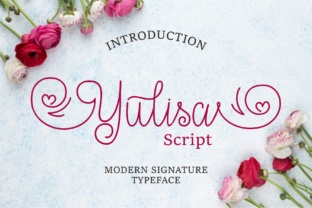
Yulisa: A Modern, Feminine Font with a Luxurious Feel
Yulisa is a contemporary font designed to evoke a sense of elegance and refinement. Its feminine characteristics make it particularly well-suited for projects that aim to convey grace, sophistication, or a touch of luxury. With its unique design elements and alternative characters, Yulisa stands out in the world of typography, offering designers a versatile option for a variety of creative applications.
The font's aesthetic appeals to those working on branding, editorial layouts, or personal projects that require a delicate yet striking visual presence. Its balance between modernity and traditional script elements makes it adaptable across different contexts, from wedding invitations to fashion brand identities.
What Makes Yulisa Distinct?
One of the defining features of Yulisa is its use of alternative characters. These variations allow for greater customization and can add a personalized touch to any design. Whether it’s an ornate 'a' or a stylized 'g', these details contribute to the font’s overall luxurious feel.
Unlike many other script fonts that may lean too heavily into one style—either overly casual or excessively formal—Yulisa finds a middle ground. It maintains a soft, flowing appearance while still being legible in larger sizes. This balance makes it a practical choice for both digital and print media.
Additionally, Yulisa’s structure allows for seamless integration with other typefaces. It pairs well with sans-serif fonts for contrast or with serif fonts for a more cohesive, classic look. This flexibility enhances its usability across different design projects.
Comparing Yulisa to Similar Fonts
When evaluating Yulisa against other script fonts, it’s important to consider how it stacks up in terms of style, versatility, and practicality. Fonts like Lato, Playfair Display, or Great Vibes each have their own strengths, but Yulisa offers a distinct blend of femininity and modernity that sets it apart.
For example, while Great Vibes has a more vintage, handwritten feel, Yulisa leans toward a cleaner, more polished appearance. This makes it better suited for professional or high-end branding rather than informal or artistic projects. On the other hand, Lato, though not a script font, provides a strong contrast when paired with Yulisa, creating a dynamic visual hierarchy.
In comparison to other feminine script fonts, Yulisa’s inclusion of alternative characters gives it an edge in terms of customization. Many similar fonts offer limited variation, which can limit creative expression. Yulisa’s design encourages experimentation, making it a valuable tool for designers looking to add a unique touch to their work.
Strengths and Tradeoffs of Yulisa
One of Yulisa’s main strengths is its ability to elevate the visual appeal of a project without overwhelming the reader. Its subtle curves and refined strokes make it ideal for headings, logos, and titles where a touch of elegance is needed. This makes it a popular choice in industries such as fashion, beauty, and lifestyle branding.
However, Yulisa may not be the best fit for every design scenario. In cases where readability is paramount—such as body text in long-form content—it may not perform as effectively as a more straightforward typeface. Designers should consider the context and audience when deciding whether to use Yulisa in a larger scale.
Another consideration is the availability of the font. While Yulisa is widely used in design software, some users may find it less accessible compared to more mainstream fonts. This could be a factor for those working within tight deadlines or limited resources.
Best Fit Situations for Yulisa
Yulisa excels in scenarios where a feminine, elegant tone is desired. It works particularly well in branding for women’s products, event invitations, and editorial designs that aim to create a sense of sophistication. Its versatility also makes it suitable for personal projects, such as custom stationery or social media graphics.
For instance, a fashion designer launching a new collection might use Yulisa for the brand’s logo or promotional materials to convey a sense of exclusivity and refinement. Similarly, a wedding planner could incorporate Yulisa into invitations to add a touch of class and personalization.
It’s also a good choice for digital marketing campaigns targeting a female audience. When used strategically, Yulisa can enhance the visual identity of a brand while maintaining a professional appearance.
When Yulisa May Not Be the Right Choice
While Yulisa is a powerful tool, there are situations where it may not be the most effective choice. For example, in projects that require a more neutral or minimalist aesthetic, Yulisa’s ornate style could feel out of place. In such cases, a simpler typeface might be more appropriate.
Additionally, if the goal is to create a bold, eye-catching design, Yulisa’s subtlety may not provide the necessary impact. Designers looking for a more dramatic or attention-grabbing font may need to explore other options that emphasize weight, size, or contrast.
It’s also worth noting that Yulisa’s alternative characters, while beneficial for customization, may require additional effort to implement correctly. Users unfamiliar with advanced typographic features may find this aspect challenging, especially if they’re working under time constraints.
Practical Examples and Use Cases
Consider a small business owner launching a boutique skincare line. They want their brand to feel luxurious and trustworthy. By using Yulisa in their logo and packaging, they can communicate a sense of quality and care. The font’s feminine qualities align well with the target audience, reinforcing the brand’s message without being overly complex.
On the other hand, a tech startup aiming for a modern, clean image might opt for a sans-serif font instead. In this case, Yulisa’s style would not align with the desired tone, and a more minimal typeface would be a better fit. This highlights the importance of matching the font to the brand’s overall identity.
Another example is a blog focused on interior design. Using Yulisa for headings could add a stylish element to the site, but the body text would likely benefit from a more readable font. This demonstrates how Yulisa can be used effectively in specific parts of a design without compromising functionality.
Conclusion: Making an Informed Decision
Yulisa is a compelling choice for designers seeking a modern, feminine font with a luxurious feel. Its alternative characters, balanced design, and adaptability make it a valuable addition to any typographic toolkit. However, its suitability depends on the specific needs of the project and the intended audience.
By understanding the strengths and limitations of Yulisa, designers can make informed decisions about when and how to use it. Whether it’s for a high-end brand, a personal project, or a creative endeavor, Yulisa offers a unique way to express elegance and sophistication. As with any design element, the key is to match the font to the overall vision and goals of the work.