Xhers: A Versatile All Caps Sans Serif Font for Modern Design
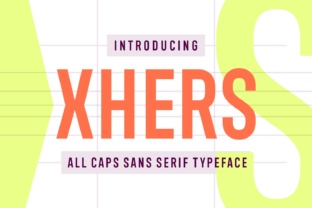
Xhers is a distinctive all caps sans serif font that offers a clean, modern aesthetic ideal for headlines and display text. Its balanced weight and consistent stroke make it highly readable across various sizes and formats. Designed with versatility in mind, Xhers provides a reliable option for designers looking to add a touch of sophistication to their work without sacrificing clarity.
As a sans serif typeface, Xhers belongs to a category known for its simplicity and neutrality. Unlike serif fonts, which often convey tradition or formality, sans serifs like Xhers are associated with minimalism, innovation, and contemporary design. This makes Xhers particularly well-suited for digital interfaces, branding materials, and editorial layouts where a modern visual language is preferred.
What Makes Xhers Unique?
Xhers stands out due to its all caps design, which eliminates the need for lowercase characters. This feature can be both an advantage and a limitation depending on the context. For headlines, logos, and titles, the uniformity of uppercase letters can create a strong, cohesive look. However, for longer texts, this format may reduce readability compared to fonts that include lowercase variants.
The font’s weight distribution is another key characteristic. Xhers maintains a consistent thickness across all strokes, avoiding the subtle variations found in many other sans serifs. This uniformity contributes to a clean, structured appearance that works well in both print and digital environments. It also ensures that the font remains legible at smaller sizes, making it a practical choice for UI elements or short-form text.
Comparing Xhers to Similar Fonts
When evaluating Xhers against other all caps sans serifs, it’s important to consider how each font aligns with specific design goals. Fonts like Bebas Neue and Montserrat are popular choices for similar use cases, but they differ in style and application. Bebas Neue, for example, has a more rigid, geometric structure, while Montserrat offers a softer, more humanist feel. Xhers occupies a middle ground, blending structure with a slightly more organic touch.
Compared to other all caps fonts, Xhers is less likely to appear overly aggressive or stylized. This makes it a better fit for projects that require a balance between boldness and subtlety. In contrast, fonts like Avant Garde or Futura may lean more toward experimental or retro aesthetics, which could be less appropriate for certain design contexts.
Strengths and Limitations of Xhers
Xhers excels in scenarios where a strong, clear visual presence is needed. Its all caps format ensures that every letter is equally prominent, which can be beneficial for creating emphasis or hierarchy in a layout. This quality makes it a good choice for branding, signage, and web headers where immediate recognition is important.
However, the lack of lowercase characters means that Xhers is not suitable for body text or long paragraphs. In such cases, designers may need to pair it with a complementary font that includes lowercase variants. For example, using Xhers for a headline and a standard sans serif like Open Sans for the body text can provide both impact and readability.
Another limitation is that Xhers may not offer the same level of typographic nuance as fonts with more extensive character sets. While this is not a major issue for most design applications, it’s worth considering if the project requires special symbols, ligatures, or extended language support.
When Xhers Is the Right Choice
Xhers is ideal for projects that prioritize visual impact over detailed typography. It works well in situations where the primary goal is to convey a message quickly and effectively. For instance, in a digital marketing campaign, using Xhers for a call-to-action button or a promotional banner can help draw attention without overwhelming the viewer.
It is also a strong option for logo design, especially when the brand identity leans toward modernity and simplicity. The font’s clean lines and consistent weight contribute to a professional, polished look that can enhance the overall appeal of a logo. Additionally, its all caps format ensures that the logo remains legible at various scales, from business cards to billboards.
Situations Where Alternatives May Be Better
While Xhers is a solid choice for many design tasks, there are scenarios where other fonts might be more appropriate. For example, in a publication that requires extensive text, a font with lowercase characters and a more refined structure would be necessary. Similarly, in a project that demands a more traditional or decorative style, a serif or script font could provide a better fit.
Designers should also consider the target audience when selecting a font. If the project is aimed at a younger demographic, a more playful or dynamic font might resonate more than the neutral tone of Xhers. Conversely, for a high-end or luxury brand, a font with a more elegant or refined appearance could be more effective.
Practical Applications of Xhers
In real-world design, Xhers has been used in a variety of contexts. For example, a tech startup might use it for its website header to create a sense of innovation and clarity. A fashion brand could incorporate it into its social media graphics to maintain a cohesive, modern look across platforms.
Another common use is in event branding, where Xhers can be applied to posters, banners, and digital ads. Its bold, upright structure ensures that the message is immediately visible, even from a distance. This makes it a practical choice for outdoor advertising or large-scale displays.
For web developers, Xhers can be a useful tool for creating visually striking user interfaces. When paired with a contrasting font for body text, it can help establish a clear visual hierarchy while maintaining a clean, professional appearance.
Conclusion
Xhers is a versatile and reliable font that offers a modern, all caps solution for design projects requiring clarity and impact. Its balanced weight and structured form make it well-suited for headlines, logos, and digital interfaces. However, its limitations in terms of lowercase support and typographic variation mean that it is best used in specific contexts rather than as a universal font choice.
By understanding its strengths and tradeoffs, designers can make informed decisions about when to use Xhers and when to explore alternative options. Whether for branding, web design, or editorial work, Xhers provides a valuable tool for achieving a clean, stylish aesthetic.