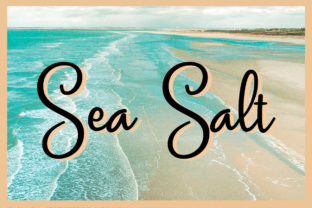
Sea Salt: A Nostalgic Script for Modern Design
In a world where digital design often leans toward clean, geometric fonts, Sea Salt stands out as a refreshing and expressive alternative. This handwritten script font brings a sense of warmth and personality to any project, making it ideal for those who want to add a touch of authenticity and charm. With its legible yet stylized form, Sea Salt is more than just a font—it's a tool that can elevate the visual storytelling of your work.
Whether you're designing a logo, creating marketing materials, or crafting a personal brand, Sea Salt offers a unique blend of nostalgia and modernity. Its soft curves and natural flow evoke a sense of familiarity, while its clean lines ensure readability across different mediums. This balance makes it particularly appealing in an era where users crave both aesthetic appeal and functional clarity.
The Rise of Handwritten Typography
Handwritten typography has seen a significant resurgence in recent years, driven by a desire for authenticity and individuality. As digital tools become more sophisticated, many designers are turning back to the human element—something that handwritten fonts like Sea Salt can provide. This trend aligns with broader shifts in consumer behavior, where people increasingly value personalization and emotional connection in the brands they engage with.
Modern audiences are no longer satisfied with generic, one-size-fits-all designs. They seek visuals that feel genuine and relatable. Sea Salt meets this demand by offering a font that feels handcrafted, as if it were written by someone with a distinct voice. This quality makes it especially effective for projects that aim to convey a friendly, approachable tone.
Why Sea Salt Stands Out
What sets Sea Salt apart from other script fonts is its ability to maintain legibility without sacrificing style. Many handwritten fonts can be difficult to read at smaller sizes or in certain contexts, but Sea Salt is designed with practicality in mind. Its consistent stroke weight and clear letterforms ensure that it remains readable even when used in body text or on digital screens.
This font also works well in a variety of applications. From social media posts and email newsletters to packaging and signage, Sea Salt adapts seamlessly to different formats. Its versatility makes it a valuable asset for professionals who need a font that can perform across multiple platforms and mediums.
Sea Salt in Contemporary Design Practices
As design workflows continue to evolve, the integration of custom fonts like Sea Salt has become more common. Designers are now able to access a wide range of typefaces that cater to specific aesthetics and messaging needs. This shift reflects a growing awareness of the role typography plays in shaping user experiences and brand identity.
For instance, in the realm of branding, Sea Salt can be used to create a cohesive visual language that resonates with target audiences. A small business owner might use it to craft a logo that feels both professional and personable, while a blogger could incorporate it into their website to add a touch of character to their content.
Practical Applications and Recommendations
When considering how to use Sea Salt in your own projects, it's important to think about the context and audience. For example, if you're designing a product label, using Sea Salt for the brand name can make it stand out while still maintaining a clean and professional look. Similarly, in a marketing campaign, it can be used to highlight key messages or call-to-action elements.
However, it's also wise to consider the limitations of handwritten fonts. While Sea Salt is highly legible, it may not be suitable for long blocks of text. In such cases, pairing it with a more traditional sans-serif or serif font can help maintain readability without compromising style.
Embracing the Nostalgic Aesthetic
The nostalgic appeal of Sea Salt taps into a deeper cultural shift—one that values simplicity, craftsmanship, and emotional resonance. In a fast-paced, technology-driven world, there's a growing appreciation for the handmade and the authentic. This is evident in the popularity of artisanal products, vintage aesthetics, and personal storytelling in marketing.
By incorporating Sea Salt into your design work, you're not just choosing a font—you're aligning yourself with a movement that celebrates creativity and individuality. This can be particularly powerful for businesses and creators who want to differentiate themselves in a crowded market.
Sea Salt and the Future of Design
Looking ahead, the demand for fonts that combine style with functionality is likely to continue. As more designers experiment with hybrid typefaces that blend traditional and modern elements, Sea Salt represents a forward-thinking approach to typography. It demonstrates that beauty and practicality can coexist, offering a solution that meets the needs of today's design landscape.
Moreover, as remote work and digital collaboration become more prevalent, the importance of visual consistency across platforms has increased. Fonts like Sea Salt, which are optimized for both print and screen, help ensure that designs remain cohesive and impactful regardless of where they're viewed.
Conclusion: A Font with Purpose
Sea Salt is more than just a stylish choice—it's a thoughtful tool that can enhance the effectiveness of your design work. By combining the warmth of a handwritten script with the clarity of a modern font, it offers a versatile solution for a wide range of creative and professional applications. Whether you're looking to add a personal touch to your brand or simply explore new design possibilities, Sea Salt provides a compelling option that resonates with contemporary sensibilities.